
Content
- 1 Introduction: The Versatile Backbone of Modern Textiles
- 2 Decoding PFY Types: FDY, DTY, and More
- 3 Key Specifications and How to Read Them
- 4 The Sustainable Shift: Navigating Recycled PFY
- 5 Practical Guide: Selecting the Right PFY for Your Application
- 6 FAQ
- 6.1 What is the main difference between FDY and DTY polyester yarn?
- 6.2 Can recycled polyester filament yarn match the quality of virgin polyester?
- 6.3 How do I choose the right denier and filament count for my fabric?
- 6.4 What does "semi-dull" mean in polyester yarn, and where is it used?
- 6.5 What makes a polyester yarn suitable for high-strength industrial sewing thread?
- 7 Conclusion: Making an Informed Material Choice
Introduction: The Versatile Backbone of Modern Textiles
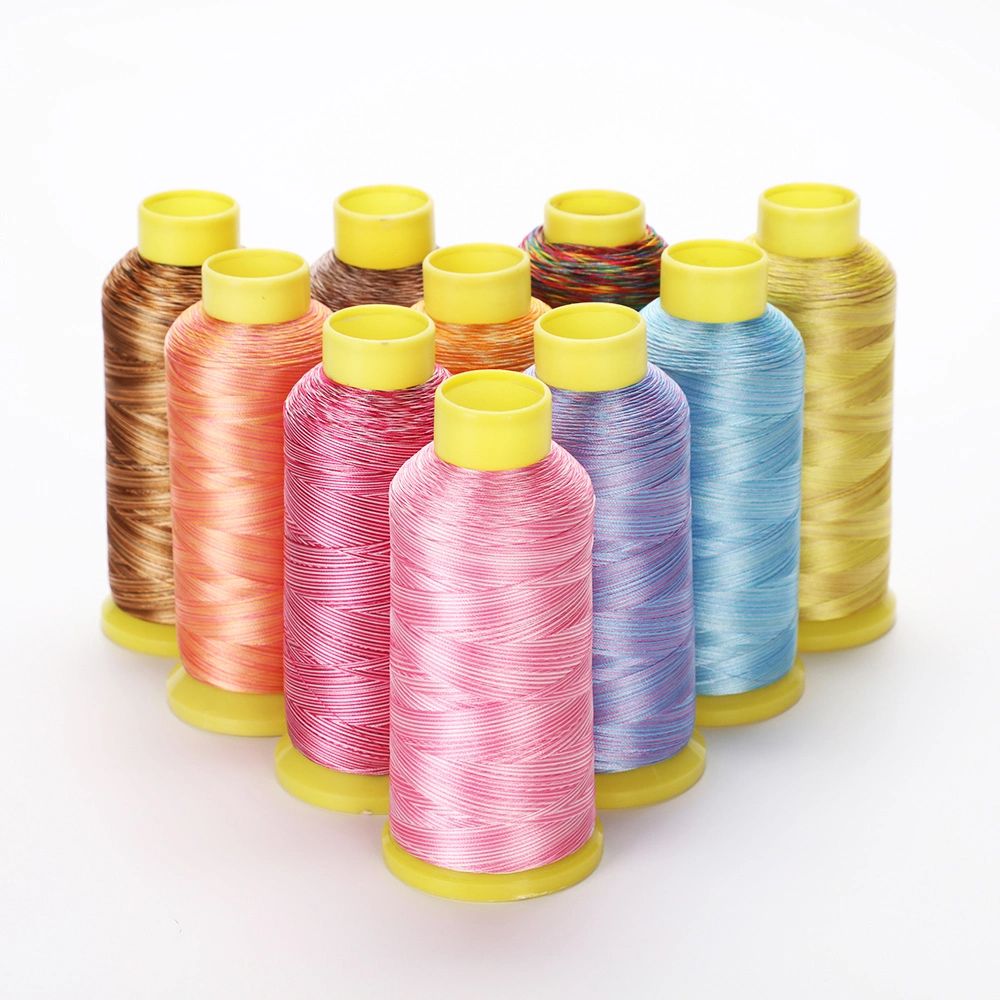
Polyester Filament Yarn
In the intricate world of synthetic fibers, Polyester Filament Yarn (PFY) stands as a monumental achievement of materials engineering, forming the essential thread from which a vast portion of our contemporary textile landscape is woven. Unlike its staple fiber cousin, which consists of short lengths spun together, filament yarn is composed of continuous, smooth strands of polyester polymer extruded to remarkable lengths. This fundamental structure grants PFY its signature characteristics: superior strength, excellent dimensional stability, inherent resistance to wrinkles and shrinkage, and a smooth, lustrous surface that can be engineered to varying degrees. From the lightweight shirts we wear and the durable upholstery in our homes to the high-strength ropes in industrial applications and the geotextiles stabilizing our infrastructure, PFY's versatility is unparalleled. Its dominance is rooted in a powerful combination of performance and cost-effectiveness, offering manufacturers and designers a reliable, adaptable, and scalable raw material. Understanding PFY is not merely an academic exercise; it is a practical necessity for anyone involved in sourcing, designing, or producing textiles, as the specific type of yarn chosen directly dictates the look, feel, durability, and functionality of the final product.
- Continuous Structure: As a filament, it provides an unbroken length of fiber, resulting in smoother, stronger, and more uniform yarns compared to spun staples.
- Core Properties: Key attributes include high tenacity, excellent abrasion resistance, quick-drying capability, and strong resilience against chemicals and environmental factors.
- Ubiquitous Application: PFY is the foundational material for woven and knitted fabrics across apparel, home furnishings, technical textiles, and industrial components.
Decoding PFY Types: FDY, DTY, and More
The journey of Polyester Filament Yarn from raw polymer to finished spool involves critical processing stages that define its final type and properties. The primary distinction lies in the drawing and texturing processes. Initially, polyester chips are melted and extruded through a spinneret to form filaments, which are then quickly cooled. These initially formed, partially oriented yarns (POY) possess low strength and high elongation, serving as the precursor for other types. The crucial FDY polyester yarn vs DTY difference arises from the next steps. Fully Drawn Yarn (FDY) is produced by fully drawing the POY in a single, integrated process. This drawing aligns the polymer chains, increasing the yarn's strength and reducing its elongation, resulting in a smooth, straight, and lustrous filament with high dimensional stability. In contrast, Draw Textured Yarn (DTY) undergoes a two-stage process: the POY is first drawn and then textured, typically through a false-twist method. This texturing introduces tiny loops, crimps, and curls along the filament length, giving the yarn bulk, stretch, a softer hand feel, and a more cotton-like appearance. The choice between the smooth, strong FDY and the bulky, stretchy DTY is one of the most fundamental decisions in textile production.
| Yarn Type | Full Name | Key Characteristics | Typical Applications |
| FDY | Fully Drawn Yarn | Smooth, straight filaments; high strength and luster; low elasticity; excellent dimensional stability. | Woven fabrics (taffeta, chiffon, linings), sewing thread, industrial yarns. |
| DTY | Draw Textured Yarn | Textured, crimped filaments; bulkier, softer hand; inherent stretch and warmth; better moisture absorption. | Knitwear (sweaters, sportswear), hosiery, fleece fabrics, upholstery. |
| POY | Partially Oriented Yarn | Intermediate product; not used directly in most fabrics; requires further drawing/texturing. | Feedstock for producing FDY or DTY. |
Key Specifications and How to Read Them
Selecting the correct Polyester Filament Yarn requires fluency in its technical specifications, which act as a blueprint for its performance. The most fundamental metrics are denier and filament count. Denier (D) measures the linear mass density, or thickness, of the yarn. A higher denier indicates a thicker, heavier yarn. Filament count refers to the number of individual continuous filaments that are bundled together to make that yarn. For instance, a 150D polyester filament yarn for weaving could be composed of 48, 72, or 96 filaments (written as 150D/48F, 150D/72F, etc.). A higher filament count with the same denier means each individual filament is finer, resulting in a softer, more supple fabric with a better drape—a critical consideration for quality woven textiles. Another vital specification is luster, which is controlled by adding delustrants (like titanium dioxide) to the polymer melt. A bright semi-dull polyester filament yarn offers a moderate sheen, balancing visual appeal with a sophisticated finish, widely used in apparel. For applications demanding extreme durability, such as high tenacity polyester filament for industrial sewing thread, the focus shifts to tensile strength and resistance to abrasion and heat during high-speed sewing. These yarns undergo special drawing processes and often have a higher molecular orientation.
- Denier & Filament Count: Define yarn thickness and fineness. Lower denier = lighter fabrics; higher filament count = softer feel.
- Luster Spectrum: Ranges from Bright (sparkling) to Semi-Dull (soft sheen) to Full Dull (matt), affecting aesthetic and perceived quality.
- Tenacity & Elongation: Measure strength and stretchability. High-tenacity yarns are essential for safety gear, belts, and threads.
- Cross-Section: Filament shape (round, triangular, hollow) influences light reflection, moisture wicking, and fabric texture.
The global push towards a circular economy has profoundly impacted the polyester industry, making recycled PFY a major growth sector. This shift addresses environmental concerns about plastic waste and fossil fuel consumption. Recycled Polyester Filament Yarn is predominantly produced from post-consumer PET bottles, which are collected, cleaned, shredded into flakes, and then re-polymerized or melted and extruded into new filaments. This process, while technologically demanding, results in rPET yarn with performance characteristics nearly identical to virgin polyester. For brands and manufacturers, sourcing from a reputable recycled polyester filament yarn supplier is crucial. Key considerations extend beyond price to include the integrity of the supply chain, the consistency of the feedstock (color, quality), and the presence of third-party certifications. Certifications like the Global Recycled Standard (GRS) or Recycled Claim Standard (RCS) provide verified traceability from waste source to final product, ensuring credibility for sustainability claims. While early challenges involved dyeability and viscosity, advancements in recycling technology have largely resolved these issues, making rPET a viable and responsible choice for a wide array of applications without compromising on quality.
| Consideration | Details for Recycled PFY (rPET) |
| Feedstock Source | Primarily post-consumer PET bottles; some post-industrial waste. Transparency is key. |
| Performance | Comparable tenacity, elongation, and processability to virgin PFY. Dyeability is excellent with modern grades. |
| Environmental Benefit | Reduces landfill waste, ocean plastic, and reliance on crude oil, lowering carbon footprint. |
| Certifications to Seek | GRS (Global Recycled Standard), RCS (Recycled Claim Standard), Oeko-Tex for safety. |
| Supplier Due Diligence | Audit supply chain transparency, consistency of supply, and technical support offered. |
Practical Guide: Selecting the Right PFY for Your Application
Translating technical specifications into the right material choice requires a clear understanding of end-use requirements. For high-quality woven fabrics used in apparel, linings, or home textiles, a fine-denier, multi-filament FDY is often preferred. Its smoothness creates fabrics with a crisp hand, excellent drape, and a luminous surface. A classic example is the use of 150D polyester filament yarn for weaving shirting or blouse materials, where a balance of durability, lightness, and a refined finish is needed. In the realm of knitwear, sportswear, and casual apparel, DTY reigns supreme. Its inherent bulk provides warmth and opacity, while its stretch and softness ensure comfort and freedom of movement. For demanding technical applications, the parameters shift dramatically. Industrial sewing, for instance, requires high tenacity polyester filament for industrial sewing thread that can withstand repeated high-speed needle penetration and friction without breaking. In automotive airbags or seatbelts, ultra-high tenacity yarns with precise denier and low elongation are non-negotiable for safety. Geotextiles and filtration media prioritize yarns with specific cross-sections and chemical resistance.
| Application Category | Recommended PFY Type & Key Specs | Rationale |
| Woven Apparel/Home Textiles | FDY; Fine denier (75D, 150D); High filament count; Semi-dull luster. | Provides smoothness, drape, strength, and a premium aesthetic for fabrics like taffeta, poplin, or satin. |
| Knitted Apparel/Sportswear | DTY; Medium denier; Various luster levels. | Offers bulk for warmth, stretch for comfort, and a soft hand ideal for jerseys, fleece, and activewear. |
| Industrial Sewing Thread | High-Tenacity FDY; Consistent denier; Excellent lubricity. | Ensures strength, abrasion resistance, and smooth passage through sewing machinery at high speeds. |
| Sustainable Product Lines | Recycled (rPET) FDY or DTY; GRS Certified. | Meets performance needs while fulfilling environmental goals and consumer demand for eco-friendly products. |
FAQ
What is the main difference between FDY and DTY polyester yarn?
This question gets to the heart of the FDY polyester yarn vs DTY difference. The core distinction lies in their structure and resulting properties. FDY (Fully Drawn Yarn) consists of straight, parallel filaments that are fully oriented during manufacturing. This gives it high strength, high luster, low elasticity, and excellent dimensional stability, making it ideal for smooth, structured woven fabrics. DTY (Draw Textured Yarn) undergoes an additional texturing process that introduces permanent crimps, coils, or loops along the filaments. This gives DTY bulk, a softer hand, inherent stretch (elasticity), better insulation, and a more matte or cotton-like appearance, making it perfect for knits and stretch fabrics.
Can recycled polyester filament yarn match the quality of virgin polyester?
Yes, modern recycled polyester filament yarn can match the key performance metrics of virgin PFY. Advances in sorting, cleaning, and polymerization technology have minimized quality gaps. Today's high-quality rPET yarn exhibits comparable tenacity (strength), elongation, dyeability, and consistency. The primary difference is often in the feedstock—recycled yarn may have slight variations in color or viscosity that top-tier suppliers expertly manage. For the vast majority of applications, from apparel to technical textiles, recycled PFY is a functionally equivalent and environmentally preferable alternative. Always request samples and technical data sheets from your recycled polyester filament yarn supplier to verify performance for your specific needs.
How do I choose the right denier and filament count for my fabric?
Choosing denier and filament count is a balancing act between fabric weight, hand feel, and durability. Denier determines thickness: lower denier (like 20D-75D) creates lightweight, sheer fabrics; medium denier (100D-300D) is standard for apparel; high denier (500D+) is for heavy-duty bags or outdoor gear. Filament count, given the same denier, affects softness: a higher filament count means finer individual filaments, resulting in a softer, more supple, and less "plastic" feeling fabric. For instance, a 150D polyester filament yarn for weaving with 72 filaments will produce a much softer, drapier fabric than a 150D/36F yarn. Always prototype with your exact yarn specifications to test the final fabric hand.
What does "semi-dull" mean in polyester yarn, and where is it used?
Luster refers to the light-reflecting quality of the yarn. A bright semi-dull polyester filament yarn has a moderate, softened sheen—it reflects light but without the high sparkle of "bright" yarn or the completely matte appearance of "full dull" yarn. This is achieved by adding a controlled amount of delustrant (titanium dioxide) during production. Semi-dull luster is extremely popular because it offers a premium, sophisticated look that is versatile for both casual and formal apparel. It avoids the cheap, shiny appearance sometimes associated with bright yarns, while providing more visual depth and richness than a full dull finish. It's the default choice for a wide range of quality fabrics.
What makes a polyester yarn suitable for high-strength industrial sewing thread?
Industrial sewing subjects thread to extreme forces. A high tenacity polyester filament for industrial sewing thread is engineered to withstand this. Key attributes include: exceptionally high tensile strength to prevent breakage under tension; excellent abrasion resistance to survive friction with the needle and fabric; good heat resistance to avoid melting at high sewing speeds; and uniform diameter with optimal lubrication for smooth passage. These yarns are typically FDY-type, produced with special high-viscosity polymer and drawn under precise conditions to maximize molecular alignment and strength. They are a specialized subcategory of Polyester Filament Yarn where failure is not an option.
Conclusion: Making an Informed Material Choice
Navigating the world of Polyester Filament Yarn is an exercise in connecting technical specifications to tangible outcomes. From understanding the fundamental FDY polyester yarn vs DTY difference to specifying the precise 150D polyester filament yarn for weaving or sourcing certified recycled polyester filament yarn, each decision cascades through the entire production chain, affecting the cost, quality, performance, and sustainability of the final textile product. Whether the goal is to create a flowing garment with a bright semi-dull sheen or to engineer a reliable high tenacity component for industrial use, knowledge is the most powerful tool. By systematically assessing application needs against yarn types, specifications, and sourcing options, designers, manufacturers, and buyers can move beyond guesswork to make confident, optimized selections that drive innovation, ensure quality, and meet the evolving demands of the market and the planet.