Content
- 1 Understanding the Basics: What is Nylon Fiber Filament Yarn?
- 2 A Deep Dive into nylon fiber filament yarn properties
- 3 The Ultimate Showdown: nylon 6 vs nylon 66 filament yarn
- 4 From Industrial to Everyday: high tenacity nylon filament yarn applications
- 5 From Pellet to Product: The nylon filament yarn manufacturing process
- 6 Sourcing Smart: where to buy nylon filament yarn
- 7 Final Verdict: Choosing the Right Nylon Fiber Filament Yarn
- 8 FAQ
Understanding the Basics: What is Nylon Fiber Filament Yarn?
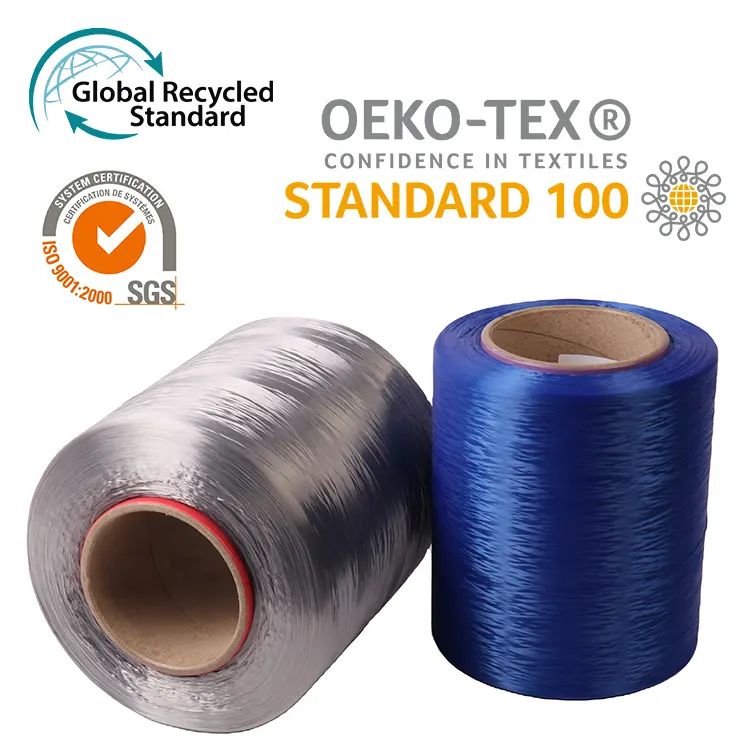
Nylon Fiber Filament Yarn & Chips
Nylon Fiber Filament Yarn is a cornerstone of modern textile and industrial manufacturing, renowned for its exceptional strength and versatility. At its core, it is a synthetic yarn composed of one or more continuous, unbroken filaments extruded from a polymer melt, typically derived from petroleum-based chemicals. Unlike natural fibers which are short and must be spun together, these continuous filaments can be incredibly long, measured in miles. This fundamental structure is what grants the yarn its signature smoothness, luster, and uniformity. The journey of this yarn begins as raw polymer chips, which are melted, forced through a spinneret to form the filaments, and then meticulously drawn and treated to achieve the desired physical properties. This controlled manufacturing process allows for a high degree of precision, resulting in a yarn that is consistent, reliable, and engineered for performance. Understanding this basic definition is the first step in appreciating why Nylon Fiber Filament Yarn is so highly valued across a vast spectrum of applications, from delicate hosiery to robust industrial cords.
The Core Definition: Continuous Filaments Explained
The term "continuous filament" is the key differentiator. It means each strand that makes up the yarn is a single, long fiber, as opposed to "staple fibers," which are short lengths (like cotton or wool) that must be twisted together to form a yarn. This continuous nature eliminates weak points that can occur at the joints of spun yarns, contributing significantly to the overall tensile strength and durability of the final product.
How is it Different from Spun Yarn?
The primary difference lies in the structure and surface texture. Spun yarns, made from short fibers, have a fuzzy, hairier surface and a less uniform diameter. Nylon Fiber Filament Yarn, on the other hand, is smooth, sleek, and lustrous. This difference translates directly into the end-use: filament yarns are chosen for applications requiring high strength, a smooth hand, and a fine appearance, while spun yarns are often preferred for their warmth, bulkiness, and natural feel.
Key Types: Nylon 6, Nylon 66, and More
While often grouped under the "nylon" umbrella, different types exist, with Nylon 6 and Nylon 66 being the most common. These names refer to the number of carbon atoms in the molecular chain of their constituent monomers. This slight chemical variation leads to distinct differences in their physical properties, which we will explore in detail later. Other specialized nylons, like Nylon 610 or Nylon 12, are also produced for niche applications requiring specific chemical resistance or lower moisture absorption.
A Deep Dive into nylon fiber filament yarn properties
The widespread adoption of nylon fiber filament yarn is not accidental; it is a direct result of a unique combination of properties that make it superior to many other materials for specific tasks. These properties are not inherent but are carefully engineered during the nylon filament yarn manufacturing process, where parameters like drawing ratio and heat treatment are precisely controlled. The result is a material that exhibits a remarkable balance of strength, elasticity, and resilience. Its high tenacity allows it to withstand significant stress without breaking, making it indispensable in load-bearing applications. At the same time, its excellent elasticity means it can stretch and return to its original shape, a crucial feature for dynamic applications like tires and activewear. Furthermore, its resistance to abrasion, chemicals, and mildew ensures longevity even in harsh environments. This deep dive into these properties will clarify why nylon fiber filament yarn is often the material of choice when performance cannot be compromised.
Unmatched Strength and High Tenacity
Tenacity is a measure of a yarn's strength relative to its linear density. Nylon Fiber Filament Yarn possesses a high tenacity, meaning it is exceptionally strong for its weight. This strength is derived from the alignment of the polymer chains during the drawing stage of manufacturing, which creates highly oriented, crystalline regions within the filaments. This makes it ideal for high tenacity nylon filament yarn applications such as parachutes, fishing lines, and tire cords.
Superior Elasticity and Recovery
One of nylon's most celebrated characteristics is its elasticity. It can be stretched significantly (up to 30% of its original length) and will recover almost completely when the tension is released. This property, known as elastic recovery, is vital for products that need to flex and move without losing their shape, such as swimwear, sportswear, and hosiery.
Excellent Abrasion and Chemical Resistance
The surface of nylon filament is tough and resilient, giving it outstanding resistance to abrasion from friction and rubbing. This is why it outlasts many other fibers in applications like carpets, upholstery, and industrial belts. It also exhibits good resistance to many common chemicals, including oils and alkalis, although it can be degraded by strong acids and some phenols.
Thermal Stability and Melting Points
While not suitable for high-temperature applications, nylon has a respectable melting point (typically between 250-290°C or 480-550°F, depending on the type) that allows it to be heat-set into permanent shapes. This thermoplastic nature is exploited in processes like pleating and texturizing. However, it is important to note that it degrades at temperatures well below its melting point, so care must be taken during ironing and processing.
The Ultimate Showdown: nylon 6 vs nylon 66 filament yarn
In the world of synthetic polymers, few rivalries are as classic as nylon 6 vs nylon 66 filament yarn. While they may appear similar to the untrained eye, their distinct molecular structures lead to significant differences in performance, processing, and cost, making the choice between them a critical decision for engineers and designers. Nylon 66, developed first, has a more symmetrical and tightly packed molecular structure, resulting in a higher melting point, greater rigidity, and better dimensional stability. Nylon 6, developed later, has a slightly less symmetrical structure, which makes it easier to process and dye, and gives it a higher impact resistance at lower temperatures. This fundamental difference means that Nylon 66 is often preferred for applications requiring high thermal resistance and stiffness, such as in automotive under-the-hood components and high-strength industrial cords. Conversely, Nylon 6's excellent dyeability and toughness make it a favorite in the textile industry for carpets, apparel, and where vibrant colors are essential. Understanding this trade-off is key to selecting the right material for the job.
Molecular Structure: The Fundamental Difference
The core difference lies in their chemical synthesis. Nylon 66 is produced from two different six-carbon monomers (hexamethylenediamine and adipic acid), creating a highly regular polymer chain. Nylon 6 is produced from a single six-carbon monomer (caprolactam), resulting in a slightly less regular structure. This structural variance is the root cause of all their differing physical properties.
Performance Comparison: A Side-by-Side Analysis
To make an informed decision, a direct comparison of their key performance metrics is invaluable. The table below highlights the most important distinctions between these two engineering polymers.
| Property | Nylon 66 Filament Yarn | Nylon 6 Filament Yarn |
| Melting Point | Higher (~265°C / 509°F) | Lower (~255°C / 491°F) |
| Stiffness / Modulus | Higher; more rigid and dimensionally stable. | Lower; more flexible. |
| Moisture Absorption | Slightly lower. | Slightly higher. |
| Dyeability | More difficult to dye; requires higher temperatures. | Excellent dyeability; accepts a wider range of dyes. |
| Impact Resistance | Good, but becomes more brittle at very low temperatures. | Superior, especially at low temperatures. |
| Processing | Requires higher processing temperatures. | Easier to process and recycle. |
Cost and Application Suitability
Generally, Nylon 66 carries a slightly higher price tag due to its more complex manufacturing process and superior thermal properties. The choice often boils down to a cost-benefit analysis. For high-performance, heat-exposed applications like tire cords and airbags, the extra cost of Nylon 66 is justified. For general-purpose textiles, carpets, and molded parts where ease of manufacturing and color are paramount, Nylon 6 is often the more economical and practical choice.
From Industrial to Everyday: high tenacity nylon filament yarn applications
The term "high tenacity" signifies a yarn that has been engineered for maximum strength and durability, and high tenacity nylon filament yarn applications are a testament to the material's incredible performance capabilities. This is not the yarn found in everyday clothing; it is a specialized material designed to withstand extreme stress, friction, and environmental conditions. The demand for such a robust material spans numerous critical industries. In the automotive sector, it reinforces tires, creates durable airbags, and forms the backbone of seatbelts, all of which are non-negotiable for passenger safety. In industrial settings, it is woven into heavy-duty conveyor belts that move tons of material, lifting slings that hoist massive loads, and fishing nets that must endure the relentless force of the ocean. Even in consumer goods, its strength is harnessed in high-performance backpacks, parachute cords, and durable outdoor equipment. The versatility of this high-strength material is a direct result of its unique molecular structure and the precision of its manufacturing, making it an irreplaceable component in modern engineering and design.
Industrial and Technical Uses
The industrial sector is the largest consumer of high tenacity nylon. Its properties are perfectly suited for demanding tasks.
- Reinforcement: Used as a reinforcing fiber in rubber products like tires, hoses, and belts to increase strength and prevent stretching.
- Ropes and Cords: Its high strength-to-weight ratio and resistance to UV degradation (when treated) make it ideal for marine ropes, climbing ropes, and parachute cords.
- Industrial Filtration: Woven into filter fabrics for high-temperature or corrosive environments.
Automotive and Aerospace Components
Safety and reliability are paramount in transportation, and high tenacity nylon delivers.
- Airbags: The fabric must be incredibly strong yet lightweight and capable of withstanding the explosive force of deployment.
- Seatbelts: Requires exceptional tensile strength to restrain occupants during a collision.
- Tire Cord: The backbone of a radial tire, providing structural integrity and puncture resistance.
Apparel and Textile Innovations
While standard tenacity yarn is common in apparel, high tenacity versions are used for performance and protective gear.
- Protective Clothing: Used in cut-resistant gloves for industrial workers and reinforced knees/elbows in workwear.
- High-Performance Sportswear: In applications where extreme durability is needed, such as in competitive sailing gear or mountaineering equipment.
Fishing Nets and Ropes
The marine environment is harsh, and materials must be up to the task.
- Fishing Nets: High tenacity nylon is strong, lightweight (so it sinks easily), and resistant to rot and mildew, unlike natural fibers.
- Mooring Lines: The strength and elasticity of nylon help absorb shock loads from waves, protecting both the vessel and the dock.
From Pellet to Product: The nylon filament yarn manufacturing process
The creation of Nylon Fiber Filament Yarn is a fascinating journey of chemical and mechanical engineering, transforming raw polymer chips into fine, strong, and uniform threads. This nylon filament yarn manufacturing process is highly controlled and consists of several critical stages, each designed to build upon the last to develop the final properties of the yarn. It begins with melting the polymer chips to form a viscous liquid. This melt is then forced through a metal plate with tiny holes, called a spinneret, creating long, thin filaments. At this stage, the molecules are randomly oriented, and the filaments are weak. The true magic happens in the drawing stage, where the filaments are stretched to several times their original length. This process aligns the polymer molecules, dramatically increasing the yarn's strength and tenacity. Subsequent heat setting locks in these properties and stabilizes the yarn's dimensions. Finally, the yarn may be texturized to give it more bulk and a softer feel, before being wound onto packages for shipment. This intricate process is what allows manufacturers to fine-tune the yarn's characteristics for specific high tenacity nylon filament yarn applications.
Step 1: Melting and Extrusion
Dry nylon polymer chips are fed into an extruder, where they are heated to a temperature of around 260-290°C (500-550°F), melting them into a homogenous liquid. This molten polymer is then pressurized and pumped to the spinneret. The spinneret can have hundreds of holes, and as the melt is forced through, it emerges as continuous streams of liquid filaments, which are immediately cooled by air to solidify them.
Step 2: Drawing and Orientation
This is the most crucial step for developing strength. The solidified, as-spun filaments are weak and have randomly oriented molecules. They are drawn (stretched) by passing them over a series of rollers, with each successive roller turning faster than the previous one. This drawing process can stretch the filaments up to 5 times their original length, aligning the long-chain polymer molecules parallel to the filament axis. This orientation creates crystalline regions that are responsible for the yarn's high tenacity and modulus.
Step 3: Heat Setting and Texturizing
After drawing, the yarn is heat-set, typically with steam or hot air, at a temperature below its melting point. This relieves internal stresses introduced during drawing and locks in the molecular orientation, giving the yarn dimensional stability and preventing it from shrinking later. For applications requiring a softer feel or bulkier texture (like for textiles), the yarn can be texturized. This involves processes like false-twisting or air-jet texturizing, which introduce crimps and loops into the filaments, making the yarn resemble a spun yarn.
Step 4: Winding and Quality Control
The finished yarn is finally wound onto bobbins, cones, or cheese packages, ready for sale or further processing. Throughout the entire manufacturing process, rigorous quality control measures are in place. Parameters like yarn denier (thickness), tenacity, elongation, evenness, and oil content are continuously monitored to ensure the final product meets the precise specifications required for its intended application.
Sourcing Smart: where to buy nylon filament yarn
Once you have determined that Nylon Fiber Filament Yarn is the right material for your needs, the next logical question is where to buy nylon filament yarn. Sourcing this material requires careful consideration, as the quality and specifications can vary significantly between suppliers. The market is diverse, ranging from massive multinational chemical corporations that produce the raw polymer to specialized distributors who cater to niche industries. For large-scale industrial users, purchasing directly from a primary manufacturer is often the most cost-effective option, allowing for custom specifications and bulk pricing. However, for smaller businesses, textile designers, or research institutions, specialized yarn distributors and wholesalers are often the best choice. These suppliers offer a wide range of stock yarns in various deniers, tenacities, and textures, with lower minimum order quantities. They also provide valuable technical support and expertise. Regardless of the supplier type, it is crucial to conduct due diligence, request samples for testing, and verify that the yarn's specifications align perfectly with your application's requirements.
Direct from Manufacturers
Purchasing directly from the source offers several advantages for high-volume buyers.
- Customization: Ability to order yarn with specific properties (e.g., unique tenacity, special additives, custom colors).
- Cost-Effectiveness: Better pricing per kilogram for large volume orders.
- Supply Chain Security: Direct relationship with the producer ensures more stable supply.
Specialized Yarn Distributors and Wholesalers
These intermediaries are ideal for buyers who need flexibility and a wide selection.
- Variety: Stock a broad range of yarn types from different manufacturers, including Nylon 6, Nylon 66, textured, and covered yarns.
- Lower MOQs: Sell in smaller quantities, making them accessible to small businesses and individuals.
- Technical Expertise: Often have knowledgeable staff who can help you select the right product.
Key Factors to Consider Before You Buy
Before placing an order, evaluate potential suppliers based on these criteria:
- Technical Data Sheet (TDS): Always request the TDS to verify the yarn's properties (denier, tenacity, elongation, etc.).
- Consistency: Inquire about their quality control processes to ensure batch-to-batch consistency.
- Lead Time and Logistics: Understand their production and shipping timelines.
- Reputation: Look for reviews or ask for references from other customers in your industry.
Questions to Ask Your Supplier
Be prepared with a list of questions to ensure you're making an informed choice.
- "Can you provide a certificate of analysis (COA) for this specific batch?"
- "What is the minimum order quantity (MOQ) for this yarn?"
- "Do you offer samples for testing before I commit to a larger order?"
- "Can you provide any application data or case studies for this specific yarn?"
Final Verdict: Choosing the Right Nylon Fiber Filament Yarn
Navigating the world of Nylon Fiber Filament Yarn reveals a material of immense depth and capability. From the subtle yet critical differences between Nylon 6 and Nylon 66 to the sophisticated manufacturing process that engineers its performance, it is clear that this is not a one-size-fits-all solution. The ultimate choice hinges on a precise matching of the yarn's properties to the demands of your application. Is high-temperature resistance the primary concern, or is superior dyeability and impact toughness more critical? Do you need the raw strength of a high tenacity yarn for an industrial application, or the softness of a textured yarn for a textile product? By understanding these nuances, you can move beyond simply buying a product and instead engineer a solution. The right Nylon Fiber Filament Yarn is out there, and armed with the knowledge from this guide, you are now well-equipped to find it and leverage its outstanding properties to create a superior end product.
Recap: Matching Properties to Your Needs
To summarize, always start with the end-use requirements. Define the necessary strength, elasticity, thermal stability, and aesthetic qualities. Then, select the appropriate type of nylon (e.g., Nylon 66 for heat, Nylon 6 for dyeability) and the correct yarn construction (e.g., high tenacity for strength, textured for bulk). Finally, source from a reputable supplier who can guarantee the quality and consistency you need.
Your Next Steps
Your journey now involves translating this knowledge into action. Begin by detailing the specific performance criteria for your project. Then, use this information to engage with potential suppliers, armed with the right questions. Request samples, test them rigorously, and make your final selection based on data, not just assumptions. By following this methodical approach, you ensure that the Nylon Fiber Filament Yarn you choose is not just suitable, but is the perfect fit for your application, guaranteeing performance, durability, and value.
FAQ
Is nylon filament yarn waterproof?
While nylon itself is not inherently "waterproof" in the way a rubber coating is, it is highly water-resistant. The fibers are hygroscopic, meaning they will absorb a small amount of moisture (typically 2-8% of their weight), which can cause slight swelling and a minor reduction in tensile strength. However, it does not degrade or lose its structural integrity when wet, unlike natural fibers like cotton or jute which rot. For a truly waterproof fabric, Nylon Fiber Filament Yarn is often used as the base material, which is then coated with a waterproof membrane like polyurethane (PU) or polyvinyl chloride (PVC).
Can nylon filament yarn be recycled?
Yes, nylon is a thermoplastic, which means it can be melted and reprocessed, making it recyclable. However, recycling is not always straightforward. Post-consumer recycling of textiles is challenging due to blends, dyes, and contaminants. The most common and effective form of recycling is post-industrial, where clean manufacturing waste (like off-cuts and rejected yarns) is collected and re-melted to create new polymer pellets. Some companies are also pioneering chemical recycling processes that can break down used nylon back into its chemical building blocks. When sourcing, it's worth asking suppliers about their use of recycled content.
What does "denier" mean for nylon filament yarn?
Denier is a unit of measurement that indicates the linear mass density of fibers. It is defined as the mass in grams per 9,000 meters of the yarn. In simple terms, a higher denier number means a thicker, heavier, and generally stronger yarn. For example, a 40-denier yarn is very fine and used for lightweight hosiery, while a 1,000-denier yarn is thick and robust, suitable for heavy-duty ballistic fabric or backpacks. When comparing yarns, denier is a critical specification for understanding the yarn's weight and intended use.
How do I prevent nylon fabric from yellowing?
Yellowing in nylon is often caused by exposure to UV light from the sun and oxidation over time. While some nylons are treated with UV stabilizers to slow this process, it can still occur. To prevent it, you can use fabrics that have been treated with a UV-resistant finish. For items like outdoor furniture or boat covers, storing them out of direct sunlight when not in use is the most effective method. For washing, use mild detergents and avoid bleach, as it can damage the fibers and exacerbate discoloration.
What is the difference between monofilament and multifilament yarn?
This refers to the construction of the yarn itself. A monofilament yarn consists of a single, continuous filament. Think of a fishing line—it's a monofilament. It is smooth, clear, and stiff. A multifilament yarn, which is the more common form of Nylon Fiber Filament Yarn, consists of many continuous filaments grouped together to form a single yarn. Multifilament yarns are generally softer, more flexible, and have a higher tensile strength than a monofilament of the same total denier. The choice between them depends entirely on the desired texture and flexibility of the final product.