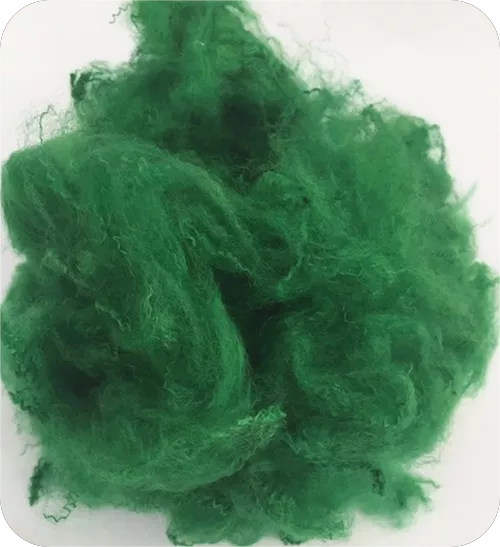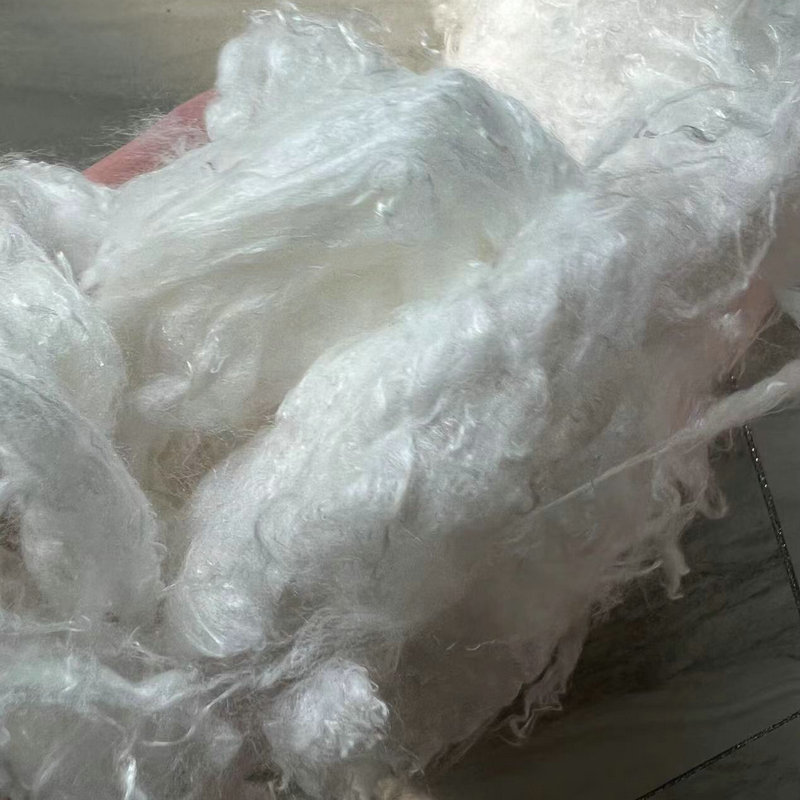
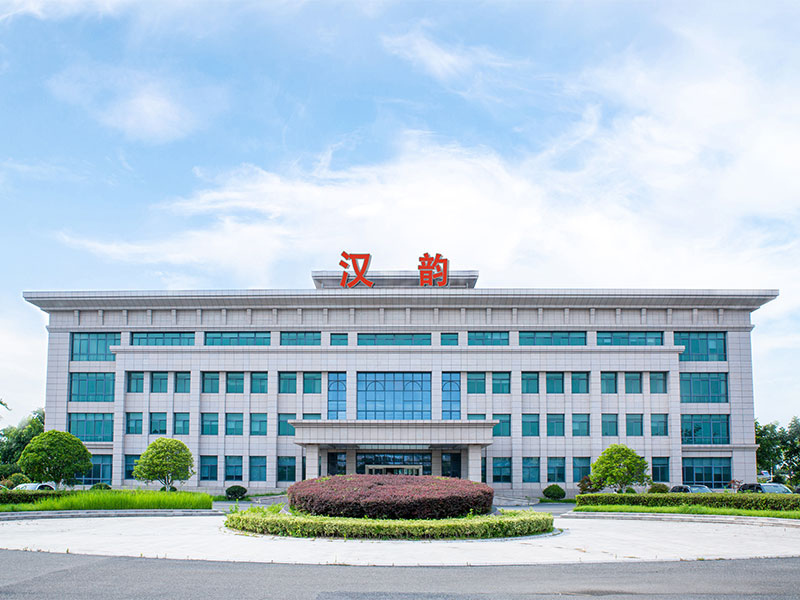
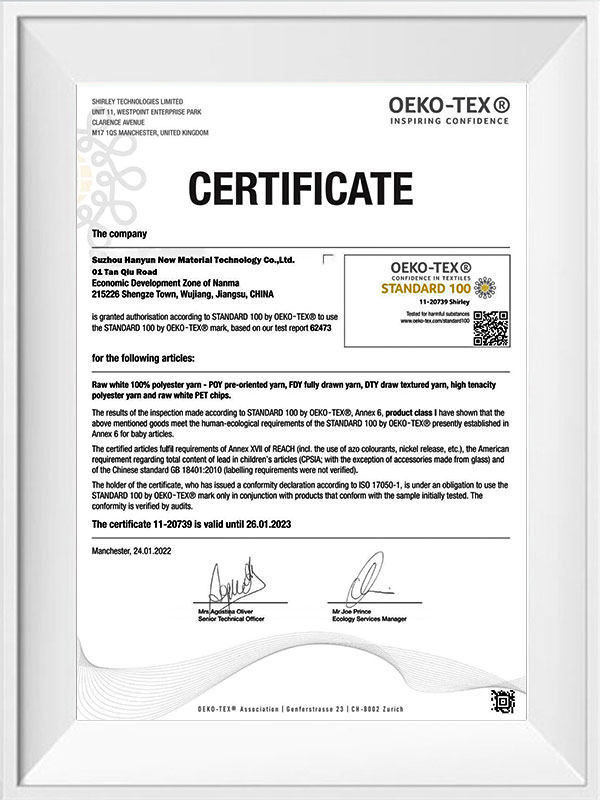
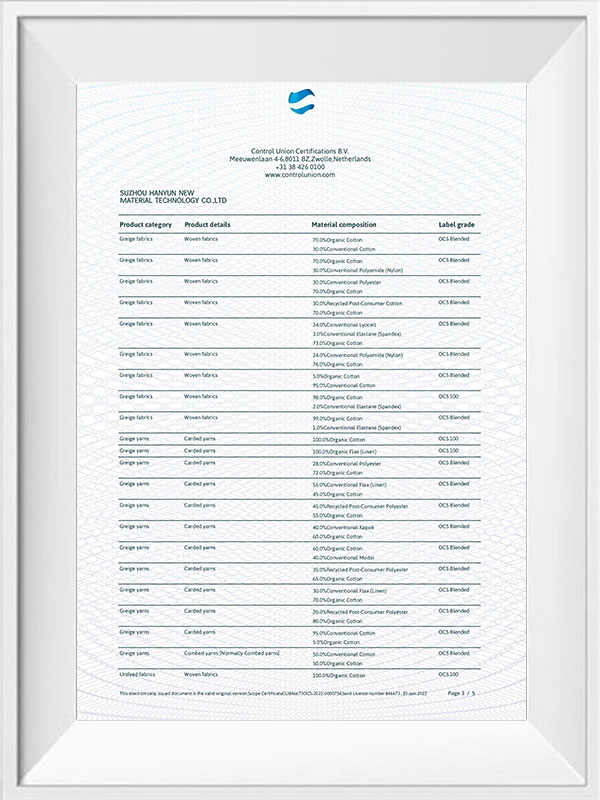
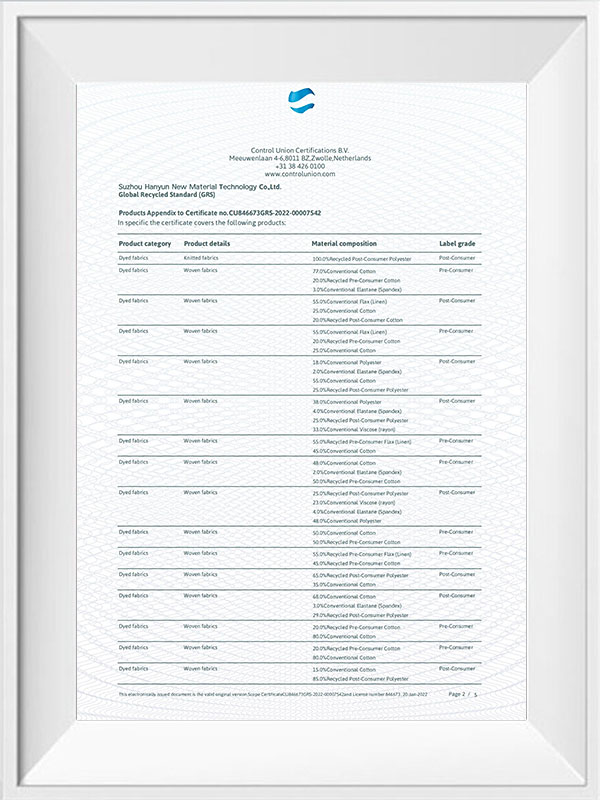
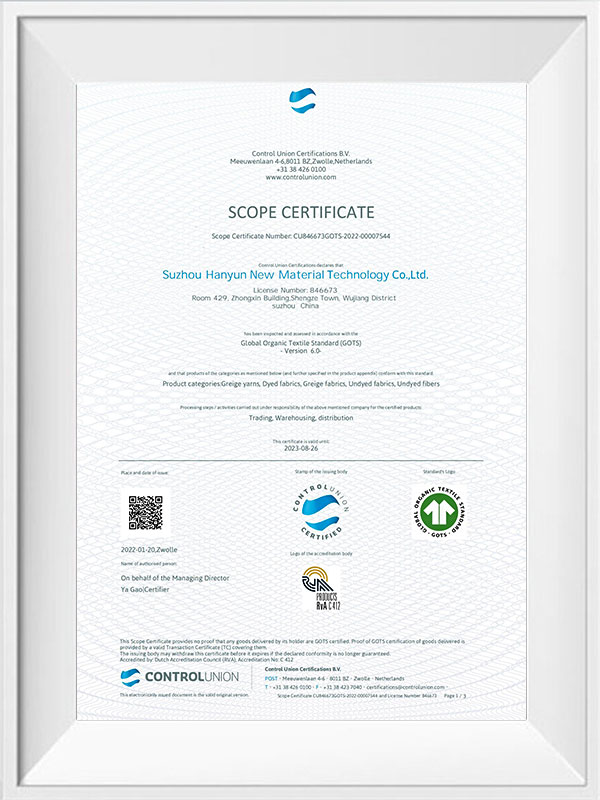
Suzhou Hanyun New Material Technology Co., Ltd. is located in Suzhou, the silk base of China. We are professional Viscose Staple Fiber manufacturers and Viscose Staple Fiber suppliers in China which focus on making various of yarn production, R&D and sales, focusing on high-performance fiber and polyester differential yarn business. Main product range: superfine fiber; polyester FDY/DTY semi-matte, bright, full matte; colored yarn; whitening polyester filament; cationic dyeable fiber; flame-retardant fiber; sea-island filament; low melting point yarn; T400, Functional fibers such as SSY and CEY. The product specification is 15D~300D. what’s most important, we are capable of customizing special yarns with different functions according to customer requirements. We Wholesale Viscose Staple Fiber. Our high-end differentiated chemical fibers, new textile materials and fabrics are sold to more than 80 countries and regions. We have more than 200 sets of twisting machines and 9 warping machines. Like POY spinning equipment, texturing machine, drawing machine, twisting machine and warping machine Among them.
Viscose staple fiber, as an environmentally friendly and excellent artificial fiber, has been widely used in the fields of nonwoven fabrics and textiles in recent years. Its softness, hygroscopicity, breathability and degradability make it the first choice material for many high-end textiles. With the growth of global demand for sustainable development and functional materials, the application trend of viscose staple fibers is also evolving.
In the field of nonwoven fabrics, viscose staple fiber is widely used in sanitary products, medical supplies and cleaning products due to its excellent hygroscopicity and softness. For example, among disposable sanitary products such as sanitary napkins, diapers and wipes, viscose staple fiber can provide a comfortable touch and good liquid absorption performance, which is very popular among consumers. In addition, in the medical field, nonwovens made of viscose staple fibers are often used in products such as surgical gowns, masks and dressings. Their good breathability and biocompatibility make them an ideal choice for medical materials. With the increase in global health and medical demand, viscose staple fiber has a broad application prospect in this field.
In the textile field, the application of viscose staple fibers also shows a trend of diversification. Due to its soft texture, high gloss and easy to dye, viscose staple fibers are often used to produce high-end clothing, home textiles and decorative fabrics. For example, in the field of clothing, viscose staple fiber is blended with fibers such as cotton and polyester to make fabrics that feel soft and breathable, suitable for spring and summer clothing. In home textiles, products such as bed sheets, curtains and sofa covers made of viscose staple fiber not only have good comfort, but also enhance the texture of the home environment. In addition, with the rise of functional textiles, viscose staple fibers are also used to develop fabrics with special functions such as antibacterial, flame retardant and ultraviolet resistant to meet consumers' demand for high-performance textiles.
It is worth mentioning that with the increase of environmental awareness, the degradability and renewability of viscose staple fibers have made their application in sustainable textiles increasingly valued. Many brands have begun to use viscose staple fiber as an environmentally friendly material to reduce negative impacts on the environment. For example, some internationally renowned clothing brands have launched environmentally friendly products with viscose staple fiber as the main raw material, which has won wide recognition in the market.
Driven by this trend, many fiber manufacturers are also constantly optimizing production processes to improve the performance and environmental protection of viscose staple fibers. Taking Suzhou Hanyun New Materials Technology Co., Ltd. as an example, as a professional fiber manufacturer, the company not only provides high-quality viscose short fiber products, but also develops more functional fibers through technological innovation and equipment upgrades to meet the needs of the company. Market demand for high-performance and environmentally friendly materials. This emphasis on product quality and sustainable development has made viscose staple fiber more diversified in the fields of nonwoven fabrics and textiles.
In general, the application trend of viscose staple fiber in nonwoven fabrics and textiles is developing towards functionalization, high-end and environmental protection. With the advancement of technology and the growth of market demand, viscose staple fiber is expected to give full play to its unique advantages in more fields and inject new vitality into the sustainable development of the textile industry.


Add: No.1188 West Second Ring Road, Shengze Town, Wujiang District, Suzhou City, Jiangsu Province, China.
Tel: +86-18361448686
Whatsapp: +86-18361448686
Wechat: +86-18361448686
E-mail:szhyjohn@hanyunnewmaterial.com
Copyright © Suzhou Hanyun New Material Technology Co., Ltd. Rights Reserved.
Wholesale Viscose Staple Fiber Suppliers